Principal percussionists are leaders of a team of percussionists. That being said, symphonic music schools primarily train percussionists to win auditions. In our training, less attention is paid to two other areas: the organizational aspect and the leadership of people. Apparently, it is assumed that one learns these skills on the job, or perhaps peripherally while in school. I have seen principals/acting principals struggle with the organizational part of the job or the leadership aspect of the job. The organizational aspect can be learned more easily, even through trial and error, but the skills needed to lead people are difficult to develop. In my experience, the worst impact in terms of human cost has occurred due to struggles with the leadership aspect.
I would like to share some approaches and ideas I feel have helped me in my role as Acting Principal Percussionist at the Calgary Philharmonic Orchestra from the 2021-22 and 2022-23 seasons. My goal is to have a conversation with my percussion colleagues about best practices for leading the percussion section. Our situation at the Calgary Philharmonic is that there is one salaried position (Principal Percussion) and the rest of the percussionists are subs, or extras, who don’t have a contract. This presents certain unique challenges – how best to manage a team of extras? How do we measure success? We could, for example, say that our approach to leadership is successful at Calgary Phil because conductors and colleagues have been complementing the section, the team seems to be having fun, and some percussionists have been telling me how the atmosphere encourages fulfilling performance.
Let me provide a bit of context for my ideas on leadership. I am fortunate to have worked under Tim Rawlings and Josh Jones, former Principal Percussionists, both great people leaders, and with Alex Cohen, Principal Timpanist, who continues to provide inspiring leadership. I will draw from their example in this article. In addition, for a theoretical foundation, I will draw from the Post Graduate Certificate in the Neuroscience of Leadership Program (Class of 2016), which I completed online through Middlesex University, UK, under Dr. Grace Chang (Lead Professor, NeuroLeadership Institute). I also suspect that certain ideas about leadership have seeped into my consciousness from the years I worked as a creativity facilitator for Leadership Development and Indigenous Leadership and Management at The Banff Centre.
“…I aim to lead with the lightest touch possible.”
My view of leadership in the percussion section is built on the following themes: clarifying the principal percussion vision, engaging the social brain and reducing threat, regulating our emotions, viewing conflict as normal and healthy, and encouraging a growth mindset. In the actual implementation of some of these ideas, I aim to lead with the lightest touch possible.
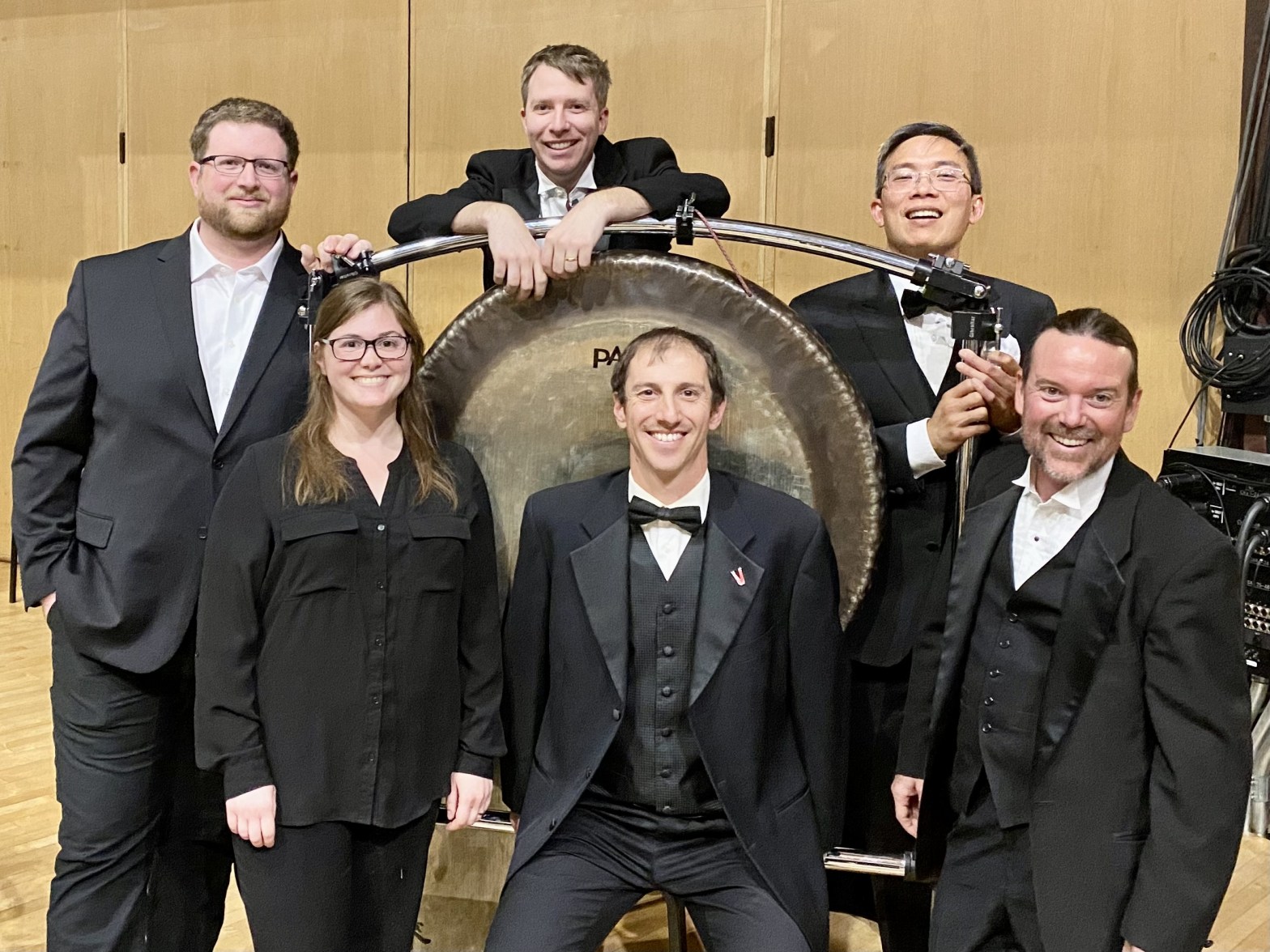
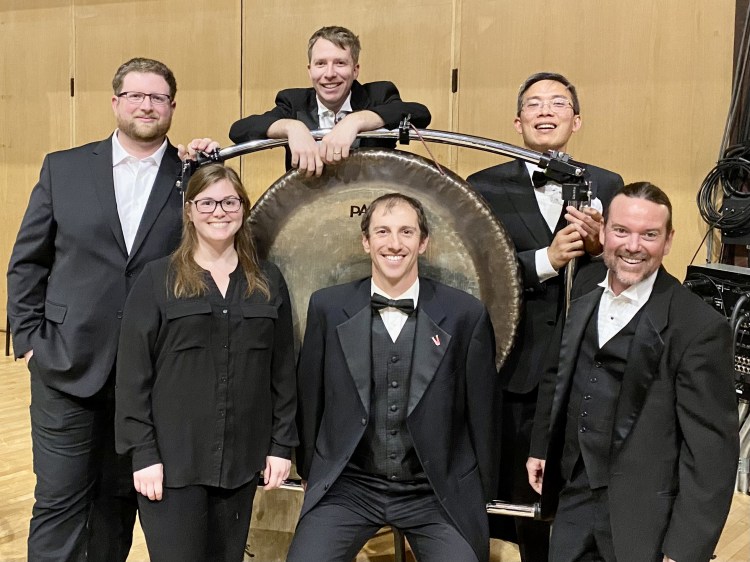
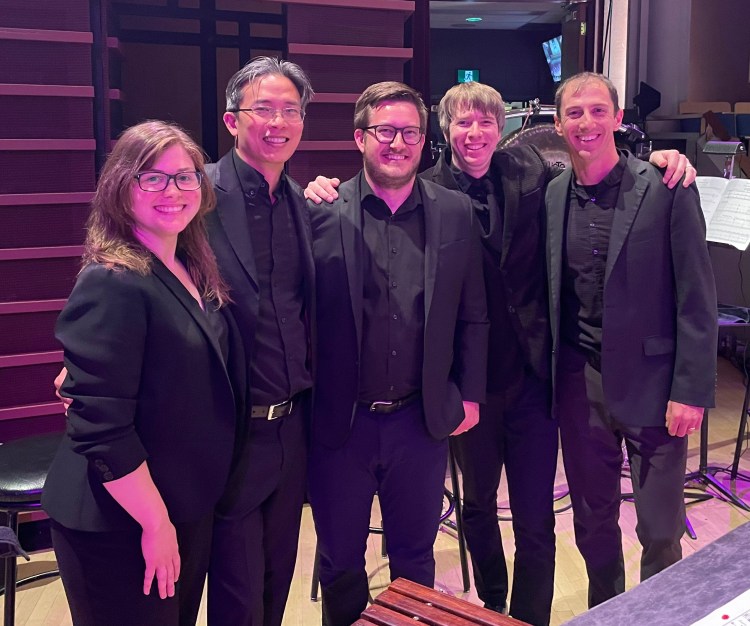
Calgary Philharmonic Percussion/Timpani Team for Scriabin Poem of Ecstasy (Sept 2022). Left to Right: Graeme Tofflemire, Sean Buckley, Chris Sies, Alex Cohen (Principal Timpanist), Malcolm Lim (Acting Principal Percussionist), Jeff Fafard.
Clarifying the Principal Percussion Vision
“While it is possible to get the job done without a clear leadership vision, I believe we can up our game if the vision is clear because our actions follow organically.”
All of us have some kind of idea of how to lead or what we’re trying to accomplish. I clarified my principal percussion vision by initially putting my thoughts down on paper. This ultimately led to the following insights. My vision could be summarized by: “We Rise” (a slightly different take on L. R. Knost’s poem “I Rise”, highlighted at a recent Philharmonic concert). My goal is to help evolve a great sounding section, to build a team that supports one another, and to develop the level of percussion performance in this city. Where possible, I aim to spread the work, build trust and relatedness, emphasize camaraderie over competition, and encourage constant development. This vision seems to work in our specific context, but, of course, every situation is different. While it is possible to get the job done without a clear leadership vision, I believe we can up our game if the vision is clear because our actions follow organically. The rest of the article is about how I try to bring my vision to life.
Reducing Threat and Engaging the Social Brain
Our brains evolved to be social (Matt Lieberman). One brain engagement approach that we studied at Middlesex University is called SCARF, identified by David Rock and his research team at the Neuroleadership Institute. SCARF stands for Status, Certainty, Autonomy, Relatedness, and Fairness; these five domains of social interaction highlight needs that leaders can help the team meet to improve engagement at work. In each of these domains, engagement can either be increased by a social reward or decreased by a social threat. Reduced threat calms the nervous system and helps musicians relax and pay more attention to their surroundings, leading generally to a more rewarding musical experience for the performer and listener.
“In the demanding context of orchestral work, I feel that the principal percussionist’s primary leadership task is to minimize the threats to the brains of our team.”
Since the demands for excellence are extremely high, symphonic work can be very stressful; and subs who have little or no security may sense multiple threats simultaneously, coming from all angles. As leaders, it’s important to remember that every action or decision supports or undermines the SCARF domains in our team. In the demanding context of orchestral work, I feel that the principal percussionist’s primary leadership task is to minimize the threats to the brains of our team.
Statusis the drive we feel to stand out from the crowd. Studies have shown that for whatever reason higher status workers live longer. I try to tap into this social need by celebrating the team’s accomplishments on social media where appropriate; it’s a public affirmation of the team doing a great job. In addition, I give sincere compliments often, in real time during rehearsals and concerts; I’m following the example of our Principal Timpanist, Alex Cohen, and former Principal Percussionists, Tim Rawlings and Josh Jones.
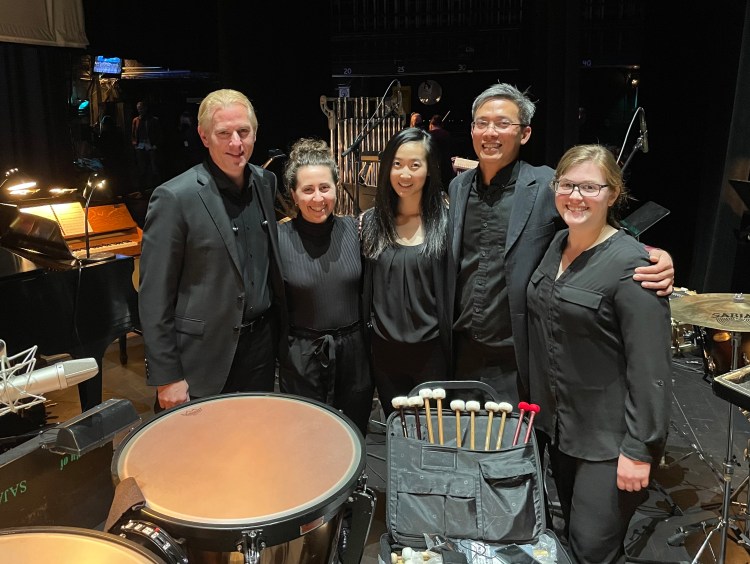
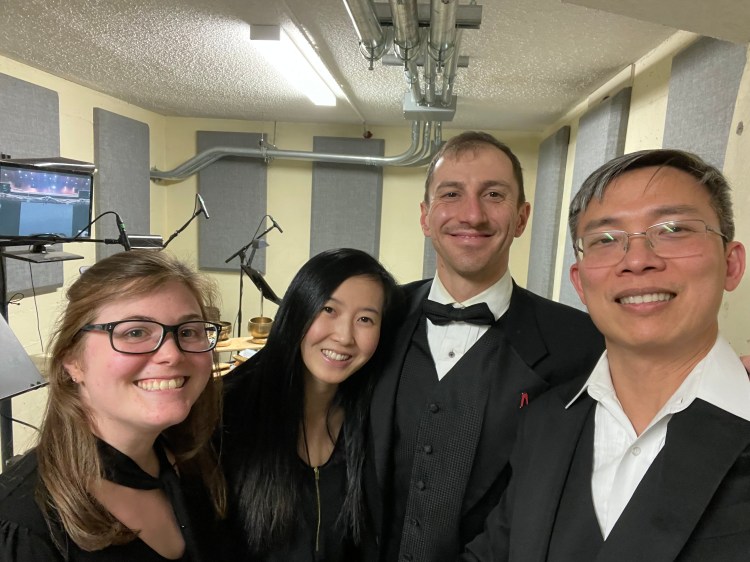
Team for Disney’s Frozen (October 2022). Left to Right: Tyler Hornby, Nia Devetzis, Linda Wang, Malcolm Lim, Sean Buckley (Timpani).
Certainty is the need for our brains to know what’s going on. Threats to certainty can occur if people don’t know what is expected of them, for example. So I try to be organized and get the music out on time, share maps of the set up, communicate, and over-communicate. If we have new personnel, I provide them with an orientation. I arrive early for the first rehearsal to set up for the team. But before all this, I help the personnel manager book people as far ahead as possible, or at least let people know the programs for which I have requested them, so they can plan their calendar. I also try to communicate the hiring process as clearly as possible. All of this reduces uncertainty.
“One way managers can induce a threat response is by micromanaging, so as much as possible I try to give my team the space to be artists.”
Autonomy refers to the need for feeling a sense of control over the work we do. One way managers can induce a threat response is by micromanaging, so as much as possible I try to give my team the space to be artists. I may have different preferences when it comes to mallet choice or how long to let instruments ring; but generally I let the team make their own choices unless there are strong musical or ensemble reasons to intervene.
The main question for me is when and how to give feedback if I hear something I don’t like. Whenever I want to say something, I ask myself if it is really necessary. Sometimes I choose not to give feedback and let the person figure things out on their own; often people are stressed and in flight/fight mode at the first rehearsal, and when they’re calmer they listen and react better to the orchestra.
When I do give feedback, I try to keep it observational or provide a solution, quick and simple. For example: “This feels on the back side of the beat to me; that was too loud for this context; you could play louder here; watch the timpanist for those hits; listen to the strings here.” I will often say that I receive feedback from my other colleagues all the time, or even invite feedback from the person I’m giving feedback to. As Alex Cohen says: “We’re just talking about music.”
To take this a step further, I promote arriving at decisions through a more democratic approach. For example, along with Alex, the timpanist, we discuss stick choices, determine as a group how long to let things sustain, or get some ears out in the hall to hear what the audience hears. This helps to build a sense of autonomy for everyone.
Relatedness is the sense that we belong. Full collaboration depends on healthy relationships, which take time and may not happen naturally. I encourage social time – dining or hiking together. It sure helps to have people who get along with each other and we are fortunate here. When I watch the section interact, I’m pleased to see how often people laugh with one another. This is not always the case with certain combinations of personalities, but as long as we are respectful of one another, the team will function. Tim Rawlings used to bring in warm buns from Chinatown into morning rehearsals, and chocolates into the opera pit; Alex brings us organic carrots. Such acts help us feel cared for.
Can relatedness go too far? Some people recommend a clear separation between work relationships and personal relationships; everyone needs to understand that these are work relationships first. I suppose each section needs to navigate these boundaries in their own way.
“I try to be transparent about hiring decisions.”
Fairness is the need for humans to feel a sense of equity and equality in social interactions. I try to be transparent about hiring decisions. In our situation, we have a first call sub whom we try to hire as much as possible. Next, I try to match the other percussionists’ strengths with the program requirements. This approach necessitates having a different call list of subs for each category of show or skill set: classical, contemporary, pops, hand drums, drum set, marimba/mallets. Since it is also important for me to build and develop broadly the percussion scene in Calgary, this way of hiring helps me spread the work among nine or ten, instead of only three to four people. I also consider seniority in the hiring process, and to a lesser extent, balance. Our hiring process has evolved over the past two years as a result of conversations between the Personnel Manager, the Principal Timpanist, and myself. As the 2022-23 season draws to a close, according to general feedback, the section has been sounding great in the different types of programs we do.
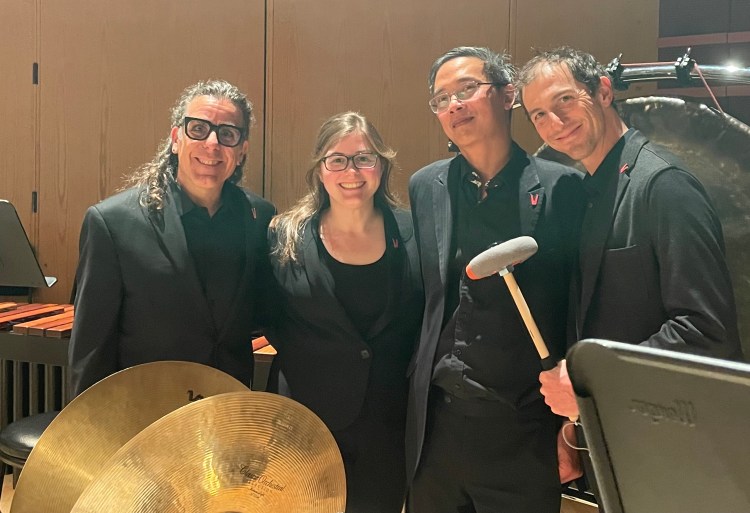
Team for Tony DeSare concert (Oct 2022). Left to Right: Bob Fenske, Sean Buckley, Malcolm Lim, Alex Cohen.
Regulating Our Emotions
“Because of the brain’s negativity bias (the tendency for people to pay more attention to negative information than positive information), emotional contagion can easily affect the team, especially if the leader displays negative emotions.”
What happens when the brains of leaders get stressed under pressure? Over-arousal of emotional circuitry impacts our thinking, and our brains exhibit an increased tendency to rely on automatic and defensive reactions to situations. In other words, we are talking about reduced cognitive functioning – it’s harder to think about our thinking. Because of the brain’s negativity bias (the tendency for people to pay more attention to negative information than positive information), emotional contagion can easily affect the team, especially if the leader displays negative emotions. Suppressing emotions doesn’t work; our team can feel that something is off. However, there are some techniques that can help us regulate our emotions and stay cool under pressure: labeling and reappraisal.
Labeling (symbolic labeling) our emotions can actually reduce limbic arousal (the triggering of our emotional circuitry). Let’s say a certain conductor elicits a threat response. We can mentally say: “I’m feeling stressed”. If something doesn’t go according to our expectations of fairness at a meeting, and we can feel the heat rising, we can mentally say: “I’m feeling angry”. Contrary to popular belief, labeling does not intensify the emotion. Assigning words to emotional states reduces arousal once it kicks in.
Reappraisal involves changing our interpretation of an event. People who reappraise more often appear to live better lives. There are several types of reappraisal, too, and all involve changing how we view the meaning of a situation. Let’s say we, or our section, don’t perform well at a concert, and we come down hard on ourselves. Examples of reappraising could be:
“It’s late, we had a long day and our brains have run out of juice to stay focussed – this is to be expected.” (Normalizing)
“The conductor looks irritated, but I don’t really know if it’s because of what we did.” (Reinterpreting)
“A year from now, we are not going to remember this, and we would tell ourselves to not be so critical, because it’s part of learning.” (Repositioning)
Team for Mason Bates (R)evolution of Steve Jobs opera (February 2023). Left to Right: Sean Buckley, Linda Wang, Alex Cohen, Malcolm Lim.
Resolving Conflict
Kenneth Cloke and Joan Goldsmith encourage us to view conflict in organizations as normal and healthy, so when it comes up, I try to face it as soon as possible. Whereas I used to avoid difficult conversations, I now believe that such conflict avoidance is detrimental to the long-term emotional health of the section. Dealing with conflict in a timely and constructive way can build a stronger foundation for relatedness.
Sometimes section players might not behave according to a particular norm because they have had other experiences and expectations. For example, they might warm up too loudly on stage or arrive at the first rehearsal unprepared. It’s simple enough to mention what our expectations are in these situations.
The most challenging situations involve conflict among two or more section players. These encounters are rare but can be emotionally intense. There are times when I have to temporarily back off a request at rehearsal if I feel a player is too emotionally invested. One incident developed over a case of peer-to-peer feedback. Because of the heightened emotion, I chose to have a face-to-face conversation the following day to diffuse the tension and understand perspectives involved. In the end, I believe we developed more solid foundations of trust.
“Principal percussionists who see conflict as an opportunity to enhance relatedness have a greater chance of building high performance teams that operate with a genuine sense of camaraderie.”
I see conflict resolution as a journey and an opportunity, not only to clarify expectations and reduce tension, but to actually deepen relationships. It can feel like a perilous night sea voyage in search of the calm eye of the storm, where mutual understanding lives. The quest involves difficult conversations, but these are crucial to the healthy functioning of the section. Usually, people aren’t trying to be difficult; there is simply an incidence of misunderstanding or of different unspoken expectations. In most cases, conflict is not a justification for not hiring that extra again. Principal percussionists who see conflict as an opportunity to enhance relatedness have a greater chance of building high performance teams that operate with a genuine sense of camaraderie.
Team for Bernstein’s Symphonic Dances from West Side Story (June 2023) Lett to Right: Sean Buckley, Malcolm Lim, Colin Van de Reep, Chris Sies, Alex Cohen.
Regenerating Ourselves
“I gently nurture the idea that ongoing development is our preferred goal, and try to lead by example.”
A growth mindset (as opposed to a fixed mindset) is the belief that our skills and abilities can be improved (Carol Dweck). I see Alex continually working at being a better timpanist. I gently nurture the idea that ongoing development is our preferred goal, and try to lead by example. Every summer, I take on a new project (e.g. improve mallet dexterity, improve drum set skills). Where needed, I will let people borrow instruments to practice on and provide exercises. It clarifies for me that we never know what we can accomplish, how far we can rise collectively, when certain goals, opportunities, and circumstances align.
I talked about this issue with our principal trumpet, Adam Zinatelli, who aims to improve year after year in the categories of pure trumpet playing (sound production, flexibility, articulation, valves), ensemble skills (intonation, balance, togetherness, leading/following, soft skills), or music (color, phrasing, taking risks, making creative and interesting choices). His goal is long-term improvement, and if our bodies start to break down as we age, he encourages us to find ways to try to mitigate and overcome those limitations. My ideal is to have the team consider these issues over the long term.
“We have all probably heard of dysfunctional percussion sections, with principals who emotionally abuse their teams, colleagues who get into lawsuits with one another, and colleagues who don’t talk to one another. Sometimes it is what it is.”
Conclusion
We have all probably heard of dysfunctional percussion sections, with principals who emotionally abuse their teams, colleagues who get into lawsuits with one another, and colleagues who don’t talk to one another. Sometimes it is what it is. This article attempts to focus a light on the importance of good leadership in the symphonic percussion section. We could say that our approach to leadership within the Calgary Phil percussion team is successful because conductors and colleagues have been complementing the section, and percussionists have been telling me how the atmosphere is relaxed and positive. In the implementation of some of the topics mentioned, I hope to lead the team with the lightest touch possible, so that the team perhaps doesn’t even feel “led”. Leadership in the symphonic setting appears to be a topic seldom mentioned in our pedagogical percussion literature, but it is one that affects all of us greatly in our daily work lives.
Acknowledgements
Dr. Grace Chang (Former Lead Professor, Neuroleadership Institute); Alex Cohen, Principal Timpanist, Calgary Philharmonic Orchestra; Tim Rawlings and Josh Jones, former Principal Percussionists, Calgary Philharmonic Orchestra; Banff Centre colleagues in Leadership: Bastiaan Heemsbergen, Kevin Yousie, Colin Funk, Kim Bater, Brian Woodward, and Leroy Little Bear; Marc Stevens, President and CEO of the Calgary Philharmonic, for our discussions on the topic of leadership; the CPO percussion team: Sean Buckley, Graeme Tofflemire, Rod Squance, Chris Sies, Bob Fenske, Jeff Fafard, Tyler Hornby, Nia Devetzis, Linda Wang, Michael Schuett, and Colin Van de Reep; my copy editors: Dave Mellow and Sean Buckley.
Literature Discussed
Cloke, K and Goldsmith, J. (2011) Resolving Conflicts at Work. Jossey-Bass.
Dweck, C. (2016) Mindset. Ballantine Books.
Lieberman, M. (2013) Social – Why Our Brains Are Wired to Connect. Crown Publishers.
Rock, D. (2020) Your Brain at Work (Revised Edition). Harper Business.
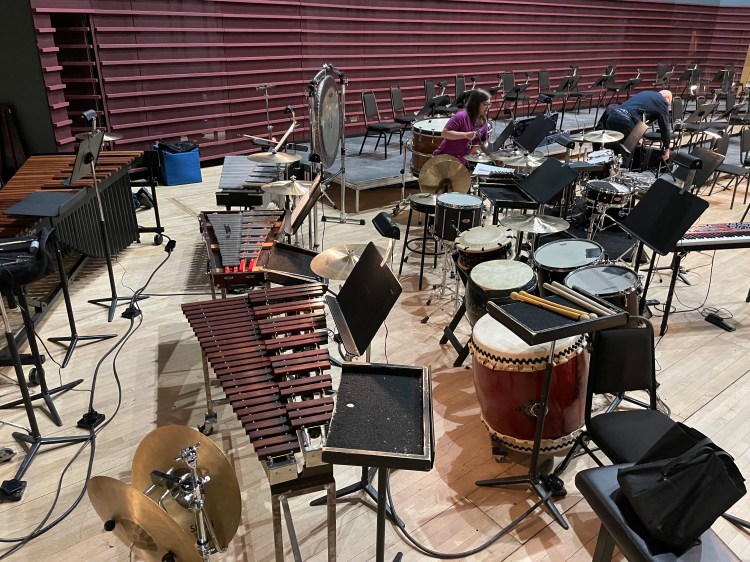
Set up for Heroes Program, Jack Singer Concert Hall, January 2023.
2 thoughts on “LEADING THE SYMPHONIC PERCUSSION SECTION: Reducing Threat, Regulating Emotion, Resolving Conflict, and Regenerating Ourselves”
Awesome tips and insights to something that is a commonly avoided topic in symphonic music and percussion sections. I especially like the parts about building strong friendship bonds – the best sections I have ever played in were with my best friends.
 Malcolm Lim
Awesome tips and insights to something that is a commonly avoided topic in symphonic music and percussion sections. I especially like the parts about building strong friendship bonds – the best sections I have ever played in were with my best friends.
LikeLiked by 1 person
Bravo Malcolm! I love your “lightest touch possible” in both your leadership and your playing!
Cheers.
LikeLiked by 1 person